
Personal Loan EMI: How It Works and How to Calculate It
Personal Loan EMI: How It Works and How to Calculate It
Planning to take a personal loan? Before applying, one of the most important things to understand is your Personal Loan EMI.
EMI stands for Equated Monthly Instalment. It is the amount you repay at regular intervals towards your loan. Understanding your EMI can help you estimate your monthly financial commitment and decide whether a particular loan amount and repayment tenure fit comfortably within your budget.
What Is a Personal Loan EMI?
A personal loan EMI is a scheduled repayment amount that generally includes both the principal amount borrowed and the interest charged on the loan.
Your EMI is generally influenced by three key factors:
- Loan amount
- Interest rate
- Loan tenure
A higher loan amount or interest rate can increase the EMI, while extending the tenure may reduce the monthly EMI but can increase the total interest paid over the repayment period.
How Is Personal Loan EMI Calculated?
A commonly used mathematical formula for calculating EMI is:
EMI = P × R × (1 + R)ⁿ / [(1 + R)ⁿ − 1]
Where:
- P = Principal loan amount
- R = Monthly interest rate
- N = Number of monthly instalments
The annual interest rate is generally converted into a monthly rate before applying the formula.
For example, if you borrow ₹1,00,000 at an annual interest rate of 12% for 12 months, the monthly interest rate would be calculated from the annual rate and used in the EMI formula.
The actual repayment amount and applicable terms depend on the lender and the specific loan agreement.
What Factors Affect Your Personal Loan EMI?
1. Loan Amount
The amount you borrow directly affects your repayment obligation. Generally, borrowing a larger amount results in a higher EMI when other factors remain unchanged.
Before selecting a loan amount, consider how much you actually need rather than simply choosing the maximum amount available.
2. Interest Rate
The interest rate has a direct impact on the cost of borrowing.
A higher interest rate can increase both your EMI and the total interest payable over the loan tenure.
Always review the applicable interest rate and other loan terms before accepting an offer.
3. Loan Tenure
Loan tenure refers to the period over which you repay the loan.
A longer tenure can reduce the monthly EMI, but because you may make repayments for a longer period, the total interest paid can be higher.
A shorter tenure can result in higher monthly payments but may reduce the overall interest cost, subject to the applicable terms.
Why Should You Calculate Your EMI Before Applying?
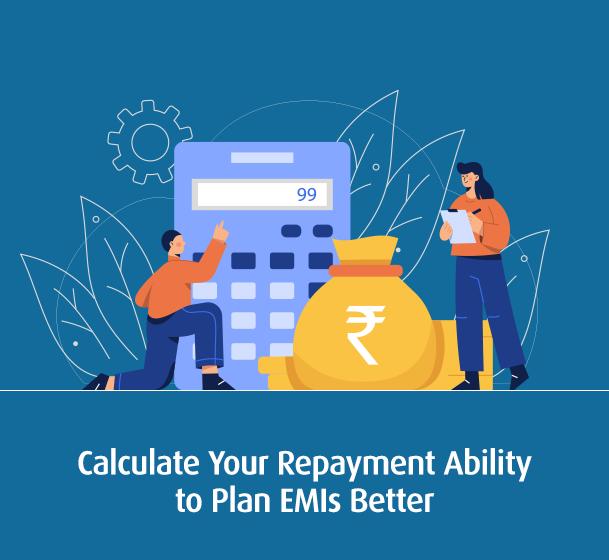
Calculating your estimated EMI before taking a loan can help you understand the financial commitment involved.
It can help you:
- Plan your monthly budget
- Compare different loan amounts
- Understand the impact of loan tenure
- Estimate your repayment obligation
- Avoid taking on an EMI that may be difficult to manage
Remember that an EMI should be considered alongside your existing expenses, EMIs, bills, and other financial commitments.
EMI vs Total Repayment: What's the Difference?
Your monthly EMI is only one part of the overall cost of a loan.
For example, two loans may have similar monthly EMIs but different tenures. The loan with the longer tenure could result in a higher total repayment because interest may be charged over a longer period.
Before accepting a loan, consider:
Monthly EMI + Total Interest + Applicable Fees and Charges = Overall Cost of Borrowing
The exact charges and repayment terms vary by lender.
How to Choose a Comfortable EMI?
There is no universal EMI amount that is suitable for everyone. Your comfortable repayment amount depends on your income, expenses, existing obligations, savings, and financial goals.
Before applying, consider:
Review Your Monthly Income
Understand your regular take-home income and how much you can reasonably allocate toward loan repayment.
Consider Existing Obligations
If you already have EMIs, credit card payments, rent, household expenses, or other commitments, include them when planning your budget.
Avoid Borrowing More Than You Need
A higher loan amount means a larger repayment obligation. Borrow according to your genuine requirement and repayment capacity.
Compare Different Tenures
Check how the EMI and total repayment change when you select different repayment periods.
What Else Should You Check Before Taking a Personal Loan?
EMI should not be the only factor you consider.
Before accepting a personal loan, review:
- Interest rate
- Loan tenure
- Processing fees
- Applicable taxes and charges
- Late payment charges
- Prepayment or foreclosure terms
- Total repayment obligation
- Other terms and conditions
Read the applicable loan agreement carefully before accepting the loan.
Frequently Asked Questions
What does EMI stand for?
EMI stands for Equated Monthly Instalment. It is the scheduled amount paid towards repayment of a loan at regular intervals.
Does a longer loan tenure reduce EMI?
Generally, extending the repayment tenure can reduce the monthly EMI. However, it may also increase the total interest paid over the life of the loan.
Does a higher loan amount increase EMI?
Generally, yes. If the interest rate and tenure remain unchanged, borrowing a higher amount generally results in a higher EMI.
Can I reduce my personal loan EMI?
Depending on the lender and available terms, choosing a different loan amount, interest rate, or repayment tenure may change the EMI. However, always consider the impact on the total repayment amount as well.
Should I choose a longer or shorter loan tenure?
The right tenure depends on your financial situation. A shorter tenure may result in a higher EMI but potentially lower total interest, while a longer tenure may reduce the monthly EMI but potentially increase the overall interest cost.
Final Thoughts
Understanding your personal loan EMI before borrowing can help you make a more informed financial decision.
Don't focus only on getting the lowest possible monthly payment. Consider the loan amount, interest rate, tenure, total repayment, applicable fees, and your existing financial commitments together.
Choose a repayment obligation that you can manage comfortably and always read the applicable loan terms before accepting an offer.
Taplend provides a digital personal loan application journey for eligible customers. Loan approval, amount, interest rate, tenure, and applicable terms are subject to eligibility, verification, and the lender's applicable policies.
Disclaimer: This article is for general educational purposes only and should not be considered financial advice. Personal loan eligibility, interest rates, fees, approval, and terms may vary based on the lender, applicant profile, and applicable policies.
Need an Instant Personal Loan?
Borrow up to ₹2,00,000 with 100% digital eKYC and instant bank disbursal.